

American Dictators: How Electing a Felon Gave Trump and Elon Musk the Power to Turn America into a Plutocracy
From ‘Make America Great Again’ to ‘Make America Obey’: The Danger of the Musk-Trump Era

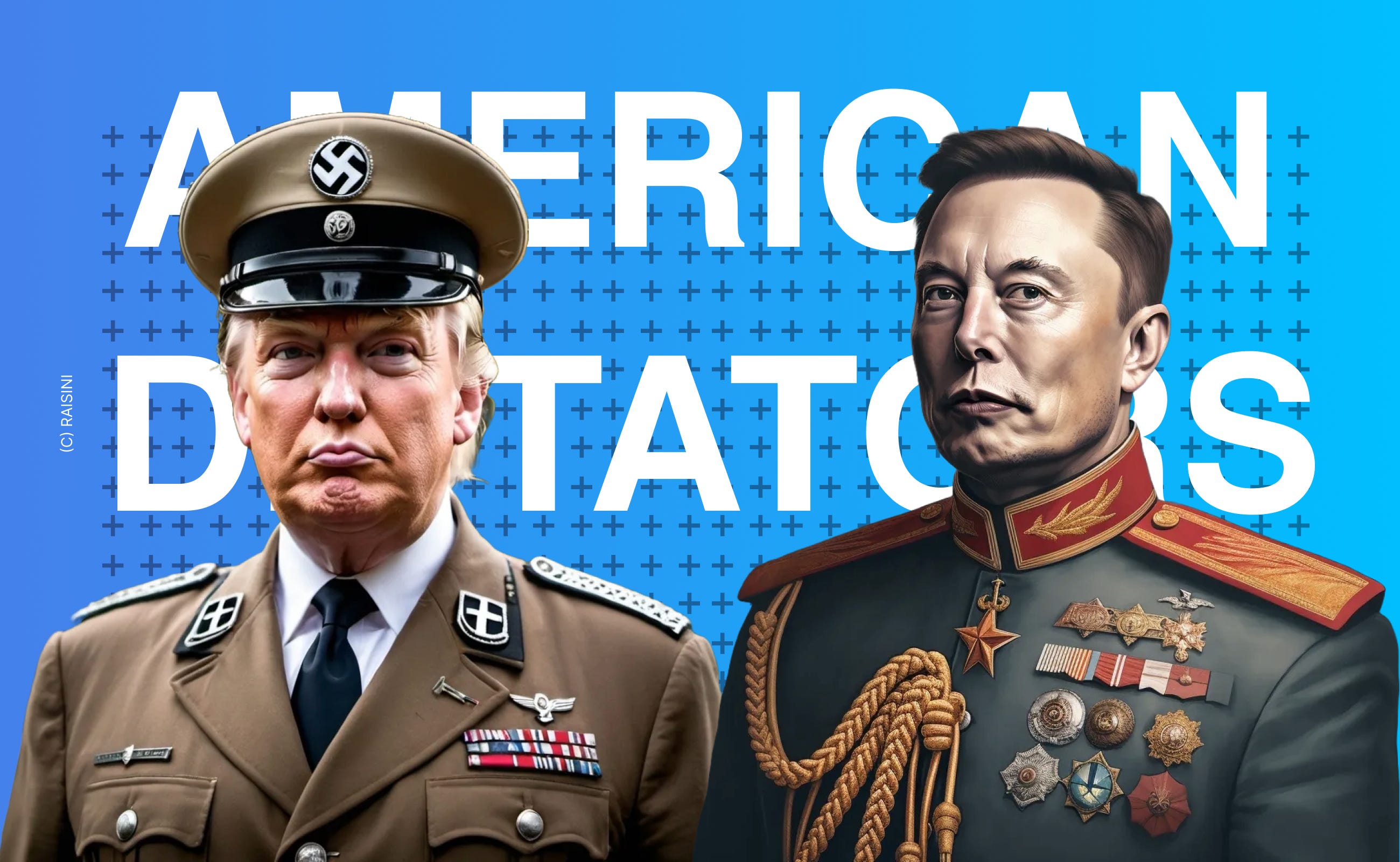
2024 will be remembered as the year of “I’m Voting for The Convicted Felon.”
Donald Trump has been indicted on multiple counts and he is a convicted felon. Yet he has been elected as the 47th President of the United States.
The political landscape of the United States in 2024 is dominated by an alliance that has shocked many observers: Donald Trump, the twice impeached and convicted ex-president and now president-elect, and Elon Musk, the alleged fraud technology billionaire. These two figures, once worlds apart in both ideology and ambition, have come together in what can only be described as a partnership of convenience, mutual benefit, and unparalleled ambition. Trump, known for his bombastic style and controversial policies, is moving back to the White House after his win, while Musk, the CEO of Tesla, SpaceX, and X (formerly Twitter), has evolved from a vocal critic of Trump to one of his most powerful allies.
What makes this alliance so concerning is not just the combination of wealth and power it represents, but the sheer influence it gives Musk over American governance and the potential for Musk’s corporate empire to shape U.S. policy. In many ways, Musk’s rise to political prominence parallels his meteoric rise in business, with his wealth, technology, and media influence positioning him to have an outsized role in shaping the future of the nation.
At first glance, it might seem like Trump’s loud and often erratic behavior is the real danger to American democracy. His brand of populism has always been a threat to established norms and institutions. However, beneath the noise and spectacle, it is Musk’s quiet, strategic consolidation of power that presents a far more insidious and long-lasting threat. The role he has carved out for himself within Trump’s orbit—especially with his appointment to head the newly created Department of Government Efficiency (DOGE)—has the potential to undermine democratic principles and reshape the nation in ways that Trump’s rhetoric alone never could.
While Trump’s brand of authoritarianism is familiar, Musk’s methodical and calculated approach to consolidating power, utilizing his vast wealth and technological control, poses a more sophisticated and enduring threat. Unlike Trump, who relies on traditional populist rhetoric and the cult of personality, Musk is leveraging his businesses, media influence, and technological advancements to reshape American society on a scale that transcends politics.
Musk’s growing influence within the White House—and his partnership with Trump—poses a far more profound danger to democracy, not just in America, but globally.
Part 1: Why America Elected a Convicted Felon?
Why, America?
Why did you elect a convicted felon as your president?
This is a man whose behavior aligns more with the villains of history than the heroes, a man accused of crimes that would disqualify most from public service—and yet, here he is, preparing to take the oath of office again.
Is it because America, as a nation, have a deep-rooted love for outlaws?
Think about it: from Billy the Kid to Jesse James, America has a history of romanticizing bandits, turning criminals into folk heroes. But those were Wild West stories; this is real life. Trump isn’t some misunderstood Robin Hood stealing from the rich to give to the poor—he’s a billionaire who reads Mein Kampf by Hitler, for heaven’s sake!
Are we so disillusioned with the system, so jaded by hypocrisy, that we’re willing to put our faith in someone who flouts every moral and legal norm? I’m not judging; I’m genuinely asking: why?
What is it about us that makes us so eager to elevate our bandits instead of holding them accountable?
The election of Donald Trump as the 47th president of the United States—despite his convictions, impeachments, and an endless stream of scandals—feels like a slap in the face to everything democracy is supposed to stand for. How does a man, repeatedly accused of abusing power, manipulating systems, and lying to the public, end up back in the Oval Office? It’s a paradox that forces us to ask hard questions about the values of the American people and the fragility of the institutions we thought would protect us from something like this.
Why, in 2024, did Americans vote for a man who had been impeached twice, convicted of crimes, and embroiled in more scandals than we can keep track of?
Is it really just about disillusionment with the status quo?
Or is there something deeper—something darker—lurking beneath the surface of this choice? A rejection of institutional elites makes sense, sure, but at what cost?
How did we get to a point where a convicted felon can convincingly present himself as the only savior of a broken system?
Maybe it’s our history of glorifying outlaws, or maybe it’s the deeply rooted polarization that’s turned politics into a battleground where winning matters more than morality. Either way, this election should make us all stop and reflect on what democracy truly means when someone so unfit for office can harness its power so effectively.
The Trump Phenomenon: A Rejection of the Political Elite
Let’s face it—Trump’s election in 2024 wasn’t about his character or his qualifications. It wasn’t even about his policies, if we’re being honest. For many voters, this was about flipping the bird to the political elite, the career politicians who seem more interested in climbing the ladder of Washington power than helping ordinary Americans. Trump’s chaotic, unpolished style, his disdain for the so-called “rules” of politics—those weren’t flaws to his supporters; they were selling points. He was the hammer they wanted to take to the system.
This wasn’t about voting for Trump the man. It was about what he symbolized: defiance, rebellion, and the hope that maybe, just maybe, someone so far outside the establishment could bring about real change. To his supporters, it didn’t matter if he came with a rap sheet of convictions, impeachments, and scandals. What mattered was that he wasn’t “them”—the polished politicians who talk big but never seem to deliver.
And honestly, who can blame people for being angry? For decades, politicians have promised to lift up the working class, help rural communities, and protect American jobs. Instead, voters have watched their factories shut down, their neighborhoods fall apart, and their concerns be dismissed by a system that feels rigged for the wealthy and well-connected. Trump’s brashness and his promise to "drain the swamp" hit a nerve because it tapped into something raw and unaddressed: a deep frustration with business-as-usual politics.
But here’s the thing—when you reject the system without vetting the alternative, you might end up with someone like Trump. His rise wasn’t just about frustration with traditional politicians; it was a gamble on someone who promised to tear it all down without a clear idea of how to rebuild. And maybe that’s the most dangerous part: voters weren’t so much picking a leader as they were betting on a wrecking ball.
The Gender Dynamics: Why Kamala Harris Was Never the Answer
How did we get here, America?
How did we decide that Donald Trump—a convicted felon, a man who reads Mein Kampf by Hitler for bedtime inspiration—was a better choice than Kamala Harris?
Let’s not pretend the answer isn’t partly rooted in the way this country struggles with the idea of female leadership. America has never had a woman in the Oval Office, and Harris, a woman of color, represented a challenge to the deeply ingrained patriarchal norms that have shaped our political landscape for centuries.
Why is it so hard to imagine a woman running this country?
Harris faced attacks from every angle, labeled "incompetent" and scrutinized in ways no male candidate would have been. It’s the same playbook that Hillary Clinton endured in 2016—only this time, the backlash felt even more visceral. Americans could tolerate Biden, a familiar older white man who made them feel safe, but the thought of Harris stepping up if Biden faltered was apparently too much for a significant portion of the electorate.
Is it possible that Trump’s brash, alpha-male persona was appealing precisely because it reinforced the kind of traditional leadership archetype this country clings to, even as it professes progress?
Trump’s election was not just a rejection of Harris but a broader rejection of change. His victory speaks volumes about a culture still steeped in misogyny, where strong women are seen as threats and the status quo is preserved by default. For a nation that loves to claim it’s the land of opportunity, the 2024 election revealed just how far we still have to go in dismantling the barriers that keep women out of power.
The Biden Administration: Failures and Disillusionment
Let’s be honest—Trump’s 2024 victory wasn’t just about his supporters loving him. It was also about Americans feeling completely let down by Joe Biden’s presidency. He came into office promising unity, stability, and competence after the chaos of Trump’s first term. But somewhere along the way, those promises rang hollow. Inflation, sky-high gas prices, and the lingering economic scars of the pandemic left many Americans feeling like they were stuck in the same rut—or worse. And when you’re struggling to pay bills or keep your small business afloat, lofty promises from Washington don’t mean much.
So, what did the Biden administration really offer to the average American?
Not enough, apparently. Healthcare reform stalled, student debt relief felt like a broken promise, and income inequality kept growing. For many voters, it seemed like Biden was too focused on pleasing the elite or playing nice in a polarized Congress to deliver meaningful change. The working class, rural voters, and even younger generations who had supported him in 2020 felt left out of the equation.
Trump didn’t need to convince these disillusioned voters to love him—he just had to present himself as the alternative to what they saw as Biden’s weak leadership. His rhetoric was simple and effective: Biden failed, and Trump could fix it. And here’s the scary part—people bought it. Despite his legal troubles, his authoritarian tendencies, and his divisive policies, Trump managed to position himself as the candidate of change. And maybe that’s the most telling thing about this election: when people are angry and desperate enough, they’ll overlook almost anything for the promise of something different.
The Role of Media and Polarization
The media landscape in 2024 didn’t just play a role in Trump’s election—it became the battlefield. On one side, you had right-wing outlets like Fox News and One America News, feeding their audiences a steady diet of pro-Trump narratives, painting him as a victim of an elaborate deep state conspiracy. On the other side, mainstream media hammered away at Trump’s legal troubles and authoritarian tendencies, framing him as unfit for office. But here’s the thing: neither side was really talking to the other. Instead, they were preaching to their own echo chambers.
How do you even have a national conversation when everyone is tuned into their own version of reality?
For Trump supporters, the constant drumbeat of legal charges wasn’t a dealbreaker—it was proof that their guy was being unfairly targeted. They saw him as a warrior taking on the corrupt establishment, and every indictment only solidified that belief. Meanwhile, Trump’s critics couldn’t fathom how anyone could support a convicted felon, and their disbelief created an even wider divide.
This polarization made it impossible for many Americans to see Trump’s actions for what they were—dangerous and self-serving. Instead, his supporters clung to the narrative that he was a champion for the “forgotten man,” even as his policies enriched the already powerful. The media didn’t just report on Trump; it helped create the myth of Trump. And in an age where facts often take a backseat to feelings, that myth was enough to win him the presidency—again.
Trump as a Symbol of American Identity
Let’s not kid ourselves—Trump’s appeal isn’t just about politics. It’s about identity. For many of his supporters, he represents a vision of America that they believe is slipping away. An America that is strong, unapologetic, and rooted in traditional values. His slogan might as well have been “Make America the Way It Used to Be,” because that’s what he symbolized to so many people who felt alienated by the rapid changes in society.
Immigration, globalization, social progress—these things aren’t just abstract policies to Trump’s base. They’re personal. They see a country that looks less and less like the one they grew up in, and they blame the elites, the media, and anyone who challenges their vision of what America should be. Trump tapped into those fears and insecurities with his promises of a golden age, where borders are strong, jobs are plentiful, and everyone knows their place.
But here’s the catch: that version of America was never as perfect as it’s made out to be, and Trump’s vision of restoring it is little more than a fantasy. Yet, his supporters were willing to overlook his flaws, his convictions, and his scandals because they saw him as the last line of defense against a country they barely recognized. And that’s the danger—when a nation invests its identity in one man, especially a man as divisive and unfit as Trump, it risks losing sight of what it truly stands for.
The Dangerous Precedent
Let’s be real—electing a convicted felon to the highest office in the land sets a precedent that should terrify all of us. What does it say about our democracy when the rules no longer apply to the people at the top? Trump’s victory in 2024 isn’t just a reflection of his supporters’ loyalty; it’s a warning sign that our political system is broken. In a country that prides itself on the rule of law, we’ve just handed the presidency to a man who has repeatedly proven that he thinks those laws don’t apply to him.
This election wasn’t just about Trump—it was about America. It forced America to confront uncomfortable truths about who we are as a nation and what we’re willing to tolerate. Are we so divided, so angry, so desperate for change that we’re willing to overlook everything Trump represents? Or is this just the natural consequence of years of political dysfunction and disillusionment? Either way, the message is clear: America is at a crossroads, and the choices we make now will define the kind of country we become.
