

Why Civilization Favors Escalation Over Cooperation
The Invisible Games That Govern Power

Welcome to this week’s issue of RAISINI.
Every week, i write about building a life on your own terms - through music, entrepreneurship, investing, health and brand-building. This isn’t theory. It’s what I’ve lived. Let’s keep going.
If you want access to private chats, live events, workshops, and more, consider becoming a paid or founding member.
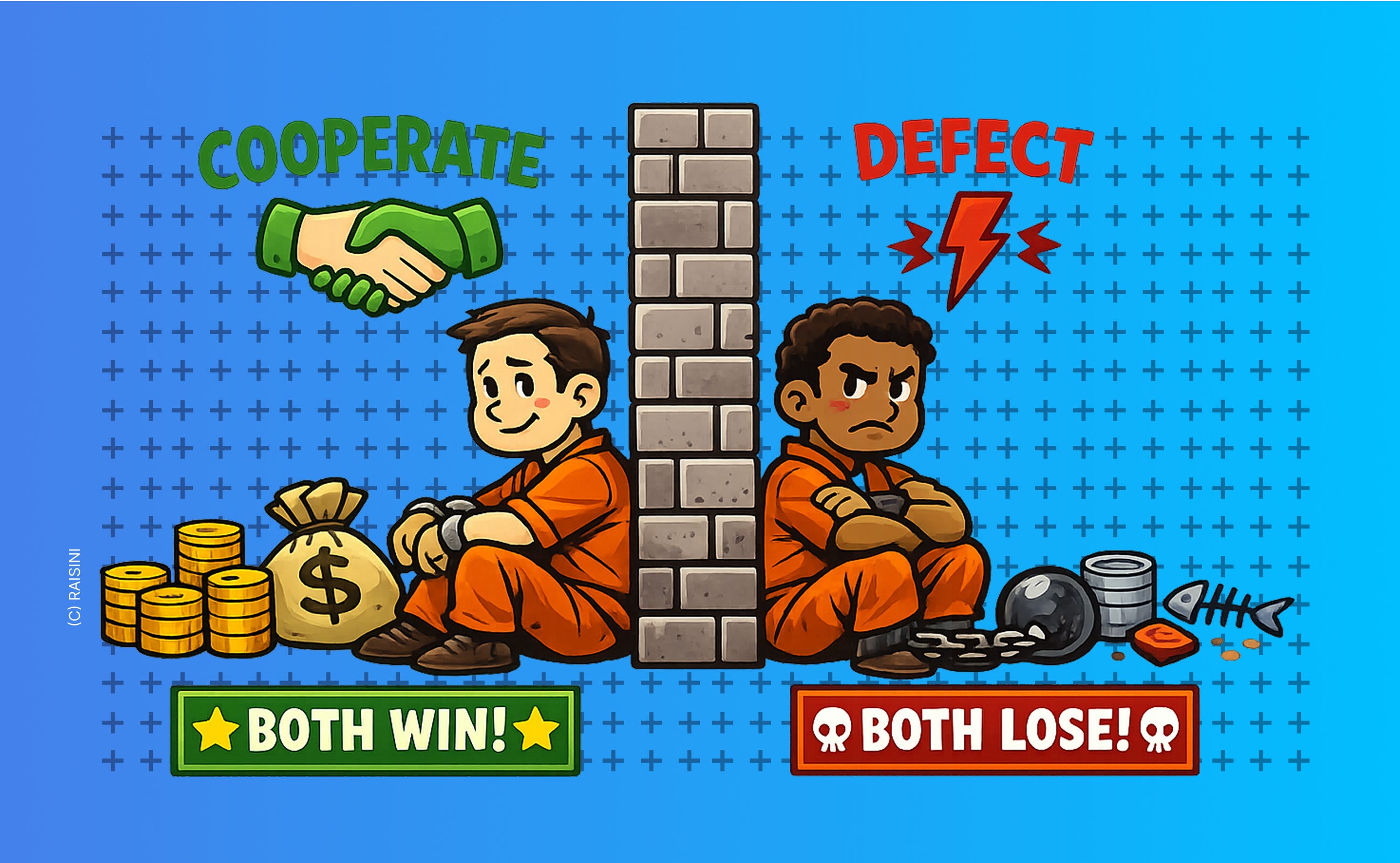
Imagine a world where everyone acts rationally, yet the system still produces outcomes nobody wants. Two parties face a choice: cooperate or compete. Cooperation would benefit both, but the risk of being exploited pushes each toward defection. The result is a stable pattern of conflict, inefficiency, and mistrust-predictable, yet seemingly irrational.
This is the logic behind politics, markets, and social institutions. The patterns that frustrate reformers, punish moderation, and reward escalation are not moral failings; they are structural outcomes of interdependent decisions under uncertainty. Strategic incentives, time horizons, and power dynamics shape behavior long before personalities or intentions ever enter the picture.
Civilization itself is a network of overlapping games. Understanding the hidden rules - the incentives, constraints, and repeated interactions - is how you move from reflexive participation to deliberate navigation.
What looks like chaos is, in fact, a game - and understanding the rules of that game is the first step toward navigating it effectively.
Once you see the hidden rules of the invisible game, nothing in politics, markets, or society will surprise you again.
The Escalation Nobody Wants
In the months leading up to a national election in the United States, senior figures within both major political parties often arrive, privately, at similar conclusions.
They recognize that the electorate is fatigued by permanent outrage, that markets reward predictability, that institutions function more effectively when legislative compromise is possible, and that long-term governing capacity depends on a minimum level of cross-party legitimacy. Away from microphones and campaign rallies, there is frequently little disagreement about the structural fragility created by sustained polarization. Yet as the public campaign intensifies, rhetoric does not soften. It sharpens. Policy differences are compressed into binary oppositions, language becomes absolutist, and the incentives that drive attention increasingly reward confrontation over calibration. The observable trajectory moves toward escalation even when many of the participants understand the aggregate cost of that escalation.
